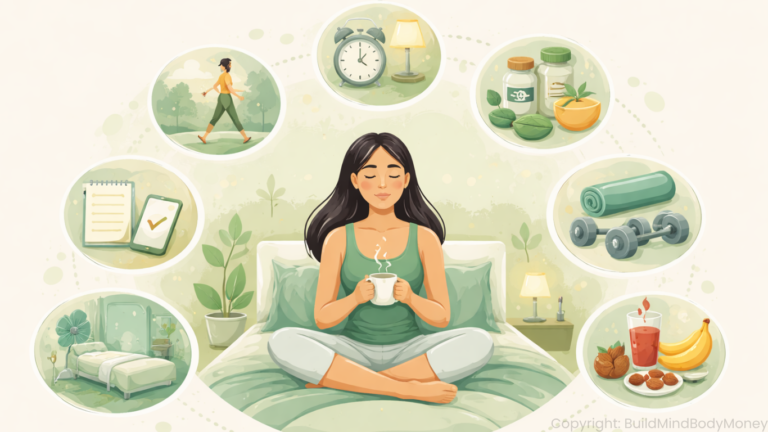
Sleep problems in your 20s, 30s, and 40s are rarely about “not being tired.” They’re about overstimulated minds, poor routines, and lifestyle friction. Several research studies have confirmed that exercise, stress regulation, and routine consistency directly improve sleep duration and quality.
This article focuses on natural, realistic, and sustainable sleep aids that you might find useful for falling asleep.
What Are The Best Natural Sleep Aids That Actually Work?
| Category | What Helps | Why It Works |
| Hormonal | Melatonin | Regulates sleep-wake cycle |
| Nutritional | Magnesium | Calms nervous system |
| Herbal | Chamomile, valerian | Mild relaxation effects |
| Behavioral | Exercise | Improves sleep depth |
| Mental | Thought control | Reduces sleep anxiety |
What Research Says
- Melatonin improves sleep quality in adults.
- Magnesium supports relaxation and sleep regulation.
- Herbal aids show mixed but promising results.
How Can You Naturally Calm Your Mind Before Sleep?
Summary: You don’t need meditation apps—you need a system to “close the day.”
The “Mental Shutdown Ritual” (Practical Method)
Instead of lying in bed thinking, try this:
- Brain Dump (5 minutes)
Write:
- What’s worrying you
- What you’ll do tomorrow
This reduces cognitive load.
- Low-Stimulation Wind Down
- Dim lights
- No intense content
- Calm music or silence
Does Exercise Really Improve Sleep Quality?
Yes—but timing and intensity matter. Moderate exercise improves sleep quality and duration, especially when done consistently.
What Actually Works
- 30 minutes of walking or strength training
- Consistency over intensity
- Morning or early evening workouts
What To Avoid
- Intense workouts late at night
- Irregular exercise patterns
What If You Hate the Gym?
You don’t need a structured workout program to get sleep benefits. What matters is regular movement that elevates your heart rate moderately. Options that don’t feel like “exercise”:
- Walking meetings or phone calls
- Dancing to music while cooking
- Swimming
- Gardening or yard work
The key is consistency. Three 30-minute sessions per week is a reasonable target that most research supports.
What Natural Foods and Drinks Help You Sleep Better?
Certain foods support melatonin and serotonin production naturally.
Sleep-Supporting Foods
- Warm milk (tryptophan → melatonin)
- Tart cherry juice (melatonin support)
- Almonds (magnesium + melatonin)
- Bananas (potassium + relaxation)
Simple Night Routine Example
- Light dinner
- Warm drink (milk or herbal tea)
- No heavy sugar or caffeine
Herbal Allies: What the Research Actually Supports
- Here’s what the science says about the most common herbal sleep aids, according to a comprehensive review in Naunyn-Schmiedeberg’s Archives of Pharmacology.
| Herb | Evidence Level | How It Works | Best For |
| Valerian root | Moderate | Interacts with GABA receptors, similar to anti-anxiety medications | General sleep onset, mild anxiety |
| Chamomile | Moderate | Contains apigenin, which binds to benzodiazepine receptors | Relaxation, bedtime ritual |
| Passionflower | Moderate | GABA modulation, reduces mental chatter | Racing thoughts, nervous energy |
| Ashwagandha | Moderate | Adaptogen that lowers cortisol over time | Stress-related sleep problems |
| Lavender | Low-Moderate | Aromatherapy effects on nervous system | Relaxation, sleep environment |
| Lemon balm | Low-Moderate | Mild sedative, often combined with valerian | Gentle calming effect |
| Kava | Moderate | Strong GABA activity, significant relaxation |
What Are the Best Practical Sleep Habits That Actually Stick?
- Set A “Sleep Trigger”
Same time, same signal (music, lighting) - Lower Light After 9 PM
Helps melatonin release - Keep Your Room Slightly Cool
Supports sleep onset - Use The Bed Only For Sleep
Trains brain association - Stop “Trying To Sleep”
Let it happen naturally - Wake Up At The Same Time Daily
Even after bad sleep - Don’t Chase Perfect Sleep
Consistency > perfection
When Natural Isn’t Enough
Sometimes sleep problems are symptoms of something else: depression, anxiety, sleep apnea, restless leg syndrome, chronic pain, or hormonal issues. If you’ve implemented these strategies consistently for several weeks and still struggle, it’s worth talking to a doctor.
Cognitive behavioral therapy for insomnia (CBT-I) is the gold-standard treatment for chronic insomnia and is more effective than medication in the long term. It’s available through therapists, apps, and online programs.
Sleep studies can identify issues like apnea that no amount of chamomile tea will fix. Sometimes the answer is medical, and that’s okay.
Conclusion
The best natural sleep aids do not come in a bottle. They come from how you live your day. When you manage your mind, move your body, and create simple routines, sleep becomes effortless, not something you struggle to achieve.
Disclaimer:
All content published on Build Mind Body Money is provided for general informational and educational purposes only and should not be considered medical, psychological, financial, or legal advice. The information is not a substitute for professional consultation. Build Mind Body Money makes no representations or warranties regarding accuracy or outcomes. Any actions taken based on this content are done at your own discretion and risk.